AI-powered apps for editing photos and videos: how to create better content on your phone.
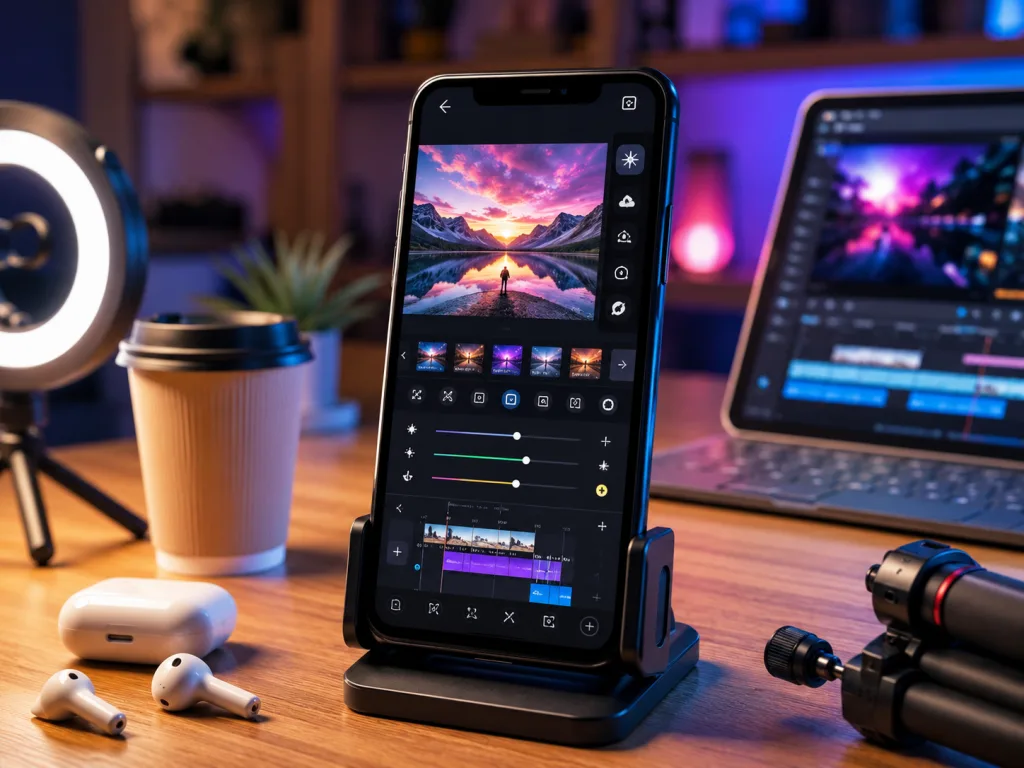
Editing photos and videos on your phone has become much easier with the arrival of AI-powered apps. Previously, improving an image, removing a background, adjusting lighting, cropping a video, or creating captions required time, technical knowledge, and more complex programs. Today, many of these tasks can be done in just a few taps, directly on your smartphone.
Artificial intelligence doesn't automatically transform all content into a success, but it helps a lot. It speeds up steps, corrects problems, suggests formats, improves the appearance of materials, and allows people without editing experience to create more beautiful content for social media, work, business, and personal projects.
How AI has changed mobile editing.
The main change lies in automation. Instead of adjusting everything manually, the user can ask the app to remove an object, improve the lighting, erase the background, trim the video, generate subtitles, or transform an idea into visual art.
Tools like Google Photos, Canva, CapCut, and Adobe Express already offer AI features for editing, creating, and organizing content. Google Photos, for example, highlights features such as Magic Eraser to remove distractions, Photo Unblur to improve blurry images, and command-based editing, allowing users to specify desired changes.
This makes editing more accessible. Those who aren't proficient in Photoshop, Premiere, or professional programs can still make visual adjustments of sufficient quality for posts, short videos, simple ads, and everyday materials.
Removing unwanted background and objects.
One of the most useful features of AI is background and object removal. You know that great photo, but with a person walking behind it, a wire showing, or an object getting in the way? AI-powered apps can identify the element and automatically fill in the space.
This feature is widely used in product photos, portraits, social media posts, and commercial materials. A small store, for example, can photograph a product with their cell phone and remove the background to create a cleaner image.
In the case of videos, AI also facilitates the cropping of people and objects, allowing for background changes, highlighting of characters, and the creation of visual effects without the need for a green screen in some situations.
Automatic image enhancement
Another common use is automatic photo enhancement. AI can adjust brightness, contrast, sharpness, colors, shadows, and details. In just a few seconds, a dark or lifeless photo can take on a more professional appearance.
This type of feature is especially helpful for those who create content in a hurry. Instead of editing every detail manually, the user applies an initial correction and then makes small adjustments according to the desired style.
Still, it's important not to overdo it. Photos with too much sharpness, excessively smooth skin, or artificial colors can look fake. Ideally, AI should be used to enhance the image, not to make it unrecognizable.
Automatic captions for videos
Automatic captions have changed the way short videos are produced. Many users watch content without sound, especially on social media. Therefore, captioned videos tend to be more accessible and easier to follow.
Apps like CapCut offer features such as automatic captions, text-to-speech, background removal, motion tracking, and stabilization—very useful tools for creators who publish on TikTok, Instagram, YouTube, and WhatsApp.
In addition to improving accessibility, subtitles help to capture attention. When they appear clearly and are well-synchronized, they facilitate understanding of the message.
Creating videos from ideas
Some apps already allow you to transform text into video. The user describes an idea, and AI helps generate scenes, script, narration, avatar, structure, or storyboard.
CapCut, for example, presents its AI-powered video generator as a tool capable of creating videos using templates, avatars, text-to-video, and automated storyboarding.
This can be useful for small businesses, students, and creators who need to produce content quickly. A simple promotional video, a short presentation, or an animated post can all be born from a description.
Even so, the human touch remains essential. AI can lay the groundwork, but it's up to the creator to review, cut out excesses, adjust language, and ensure the video has personality.
Smart templates
Templates are ready-made models that make it easy to create posts, reels, stories, banners, and presentations. With AI, they've become even more useful. Some platforms can suggest layouts, adapt formats, and transform ideas into editable designs.
Canva offers AI tools to create editable layouts, generate visual elements, and produce designs directly in the editor. It also has video-focused features, such as Magic Video, which helps transform clips into social media content with automated cuts, styling, and sequencing.
For those without design experience, this saves time and avoids amateurish results. The user chooses a template, customizes colors, fonts, images, and text, and adapts the content for different networks.
Edition for each social network
Creating better content on your phone also involves adapting the format. A video for TikTok or Reels usually needs to be vertical, quick, and direct. A YouTube video can be longer. A feed post requires good visual composition. A story needs to communicate in just a few seconds.
AI-powered applications help resize, reframe, and adjust content for different platforms. Adobe Express, for example, highlights video features such as customizable templates, trimming, clip combining, text, music, transitions, automatic captions, reframing for social channels, and background noise removal.
This type of adaptation is important because the same content can perform poorly if published in the wrong format.
Ideas for using AI creatively
AI can help create video covers, thumbnails, promotional posts, collages, captions, short scripts, narrations, supporting images, and different versions of the same content.
A creator can record a simple video on their phone, use AI to remove noise, generate automatic captions, cut out the most interesting parts, and create an eye-catching cover. A small business can photograph products, remove backgrounds, apply templates, and create more professional posts.
The secret is to use AI as creative support. It speeds up processes, but the content needs to have intention, a clear message, and a visual identity.
Cautions when editing with AI
Despite the advantages, caution is necessary. Not every AI feature delivers perfect results. Sometimes, object removal leaves marks, automatic captions misspell words, cuts look strange, or generated images appear artificial.
It's also important to respect copyright, image rights, and privacy. Avoid editing other people's photos without permission, misusing copyrighted music, or creating misleading images.
Another point is transparency. In informational, commercial, or journalistic content, significant changes made by AI may require more care to avoid confusing the public.
Conclusion
AI-powered apps for editing photos and videos are making creating content on mobile phones simpler, faster, and more accessible. Features like background removal, automatic enhancement, captions, smart templates, video generation, and social media optimization help anyone produce more engaging materials.
The best result, however, comes from combining technology and common sense. AI facilitates the technical aspects, but creativity, the message, and care for the audience remain human.
With the right apps and a little planning, your cell phone can become a powerful tool for creating better photos, videos, and content anywhere.