Health and wellness apps: how mobile phones have become allies in healthy routines.
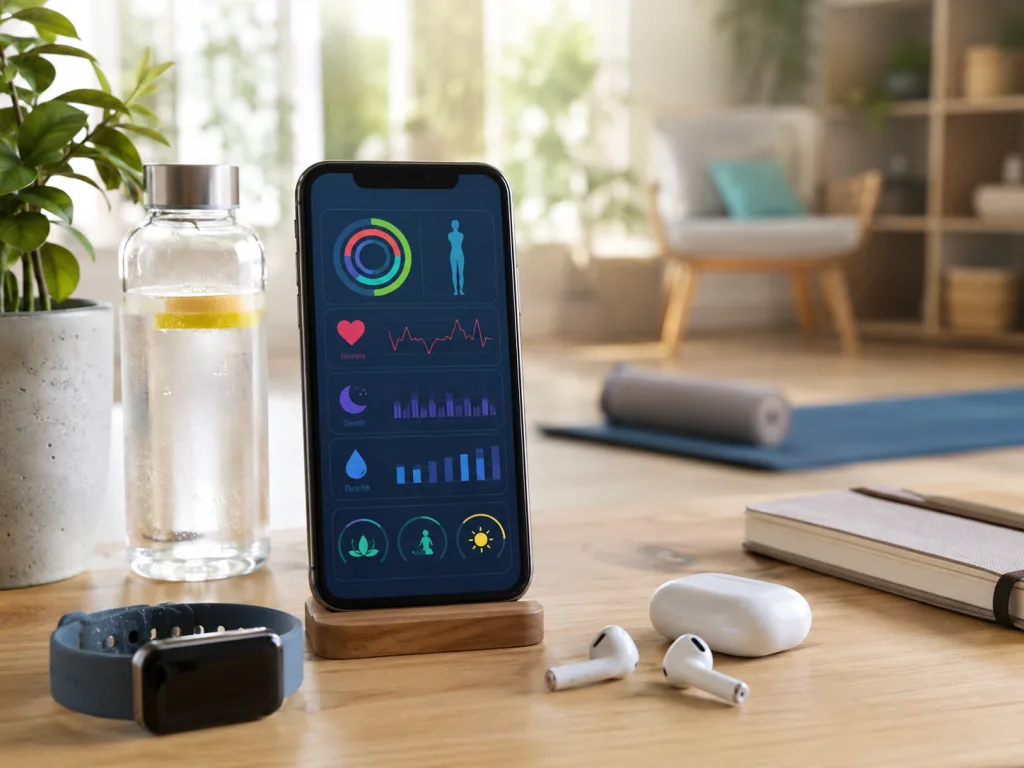
The cell phone has ceased to be just a device for messages, calls, and social media. Today, it has also become an important tool for those who want to take better care of their health, organize habits, and monitor their own well-being. With apps for exercise, sleep, meditation, nutrition, hydration, menstrual cycle tracking, mental health, and integration with smartwatches, the smartphone has begun to function as a kind of self-care hub.
This transformation is part of a larger movement called digital health. The World Health Organization highlights that digital health can help healthcare systems become more efficient, sustainable, and able to offer quality care in a more accessible way. In everyday life, this appears in simple solutions: a reminder to drink water, a step goal, a meditation app, or a sleep tracker.
The cell phone helps to track habits.
One of the biggest advantages of health and wellness apps is making habits more visible. Many people believe they sleep well, get enough exercise, or drink enough water, but only realize the reality when they start tracking the data.
Fitness apps track steps, distance, workouts, and estimated energy expenditure. Sleep apps show schedules, regularity, and potential interruptions. Nutrition tools help track meals, plan menus, and monitor patterns.
This data doesn't need to be treated as a billing issue, but as information. When you understand your routine, it becomes easier to make simple and realistic adjustments.
Exercises have become more accessible.
Previously, many people relied on gyms, personal trainers, or in-person classes to start exercising. Today, apps offer guided workouts, videos, timers, goal-oriented plans, and adapted exercises to do at home.
There are options for walking, running, weight training, yoga, Pilates, stretching, dancing, and quick workouts. This makes life easier for those who have little time, a limited budget, or prefer to exercise without leaving home.
Your cell phone also helps maintain motivation. Weekly goals, progress history, and reminders make exercise more organized. Still, it's important to respect physical limits and seek professional guidance in case of pain, injury, illness, or prolonged sedentary lifestyle.
Smartwatches have expanded monitoring capabilities.
The integration between cell phones and wearables, such as smartwatches and fitness trackers, has made health monitoring even more constant. These devices can record steps, heart rate, workouts, sleep, estimated oxygenation, and other signals.
On Android, Health Connect organizes health and fitness data from different apps, including measurements like heart rate, steps, and sleep. In the Apple ecosystem, the Health app brings together data from iPhone, Apple Watch, other devices, health records, and connected apps, allowing for a more complete view of information in one place.
These integrations help because they prevent data from being scattered across multiple applications. Users can better track their progress and notice changes in behavior over time.
Sleep and rest have gained attention.
Sleep apps have become popular because many people have realized that health depends not only on exercise and diet. Sleeping well influences mood, memory, energy levels, concentration, and physical recovery.
Apps and watches can track sleep and wake times, estimate sleep stages, identify regularity, and suggest nighttime routines. Some offer relaxing sounds, guided meditations, and smart alarms.
These tools help raise awareness, but they are not a substitute for medical evaluation. If a person snores excessively, wakes up tired even after sleeping a lot, has frequent insomnia, or is suspected of having sleep apnea, it is best to seek professional guidance.
Meditation and mental health in your pocket.
Another significant area of growth is in meditation, breathing, and relaxation apps. They offer guided practices, mindfulness exercises, ambient sounds, and routines to reduce tension.
These apps are useful because they make mental health care more accessible. In just a few minutes, it's possible to take a break, breathe better, and slow down.
However, it's important to remember that wellness apps are not a substitute for psychotherapy, medical follow-up, or appropriate treatment when there is intense suffering, persistent anxiety, depression, or frequent crises. They can be supportive, not a sole solution.
More organized eating
Food apps are also very helpful for maintaining a healthy routine. Some allow you to create shopping lists, plan meals, track water intake, log foods, and search for recipes.
For those who want to save money, eat better, or avoid waste, these resources can be useful. A shopping list app, for example, helps avoid impulse purchases at the supermarket. A recipe app can suggest ways to use ingredients that are already at home.
The key is to avoid obsessing over numbers. Counting calories or weighing everything can be helpful for some people, but it can generate anxiety in others. A healthy diet should be balanced, enjoyable, and, when necessary, guided by a nutritionist.
Reminders help with consistency.
Many habit changes fail not because of a lack of willpower, but because of forgetfulness and lack of routine. Cell phones solve part of this problem with reminders.
It's possible to set reminders to drink water, walk, stretch, take medication, go to bed earlier, meditate, or take a break. Small reminders throughout the day help transform intention into action.
The key is to use notifications sparingly. Too many alerts become distracting. Ideally, keep only truly useful reminders.
Privacy deserves attention.
Health data is sensitive. Information about sleep, location, heart rate, menstrual cycle, medications, weight, and routine can reveal a great deal about a person.
Therefore, it's important to review permissions, choose trustworthy apps, and understand how data is used. Apple states that the Health app is designed to allow control over what data is stored and shared. Health Connect on Android also presents itself as a way to share data between health and wellness apps with a focus on privacy.
Before installing an app, it's worth checking reviews, privacy policy, permissions requested, and the company's reputation.
Technology helps, but it doesn't do everything on its own.
Health and wellness apps are allies, but they don't work miracles. They help with measurement, reminders, organization, and guidance, but real change depends on daily choices.
It's also important not to let the data become a source of pressure. Not every day will be perfect. There will be days with fewer steps, worse sleep, or a less balanced diet. The goal is to track trends and improve gradually, not to be trapped by impossible goals.
Conclusion
Cell phones have become allies in healthy routines because they offer practical tools for tracking exercise, sleep, nutrition, hydration, mental health, and habit management. With apps and connected devices, it's become easier to understand patterns, set goals, and maintain consistency.
At the same time, it is essential to use these technologies in a balanced way. Apps help, but they do not replace healthcare professionals, exams, or treatments when necessary. They also require careful attention to privacy and the correct interpretation of data.
When used consciously, health and wellness apps can make self-care simpler, more accessible, and more present in everyday life.