Privacy and security apps: how to protect your data on your mobile phone.
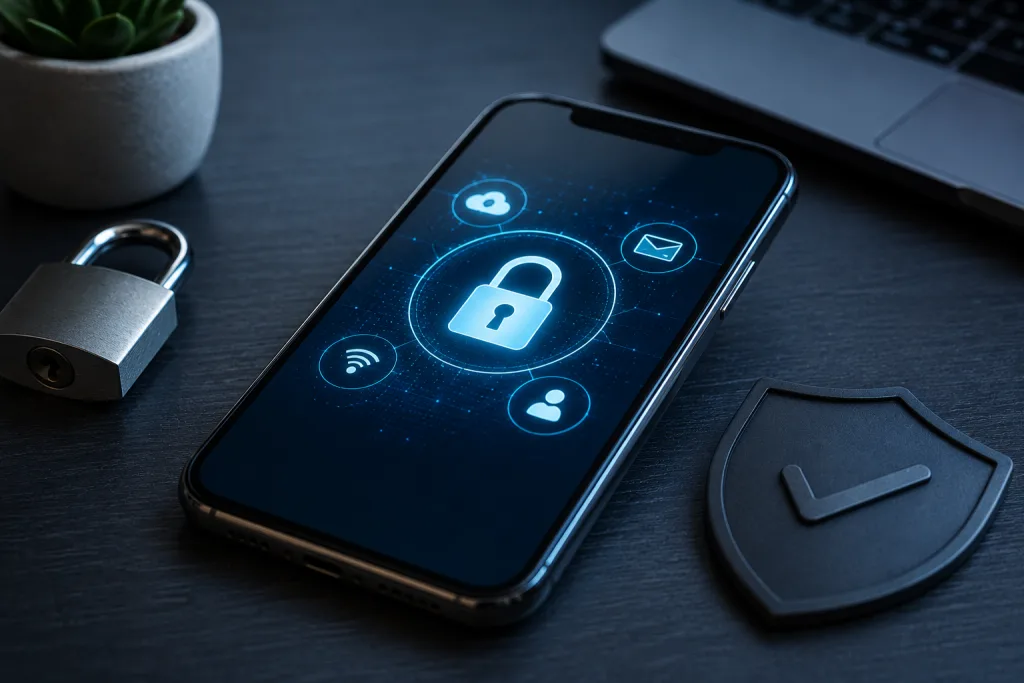
Our cell phones hold a significant portion of our digital lives. They contain personal conversations, photos, documents, banking information, passwords, location data, social media accounts, work applications, and shopping information. Therefore, protecting data on your smartphone is no longer an optional precaution but a necessity.
Digital scams, fake links, malicious apps, data breaches, and account theft are increasingly common risks. The good news is that there are apps and resources that can significantly increase security and privacy on your mobile phone. They don't make anyone invulnerable, but they help reduce risks and create a more protected digital routine.
In this article, you will understand what types of privacy and security applications can help and how to use them intelligently.
Why protect your data on your mobile phone?
Many people only worry about security when they lose their device or are victims of attempted fraud. The problem is that, when this happens, the damage can be significant. An unprotected cell phone can provide access to emails, banking accounts, social media, photos, conversations, and documents.
In addition, many apps collect information about usage habits, location, contacts, camera, microphone, and files. This data collection isn't always malicious, but it's important to know what permissions you've granted and whether they make sense.
On iPhones, for example, Apple allows you to review in "Privacy and Security" which apps have access to resources such as location, contacts, photos, microphone, camera, and Bluetooth. This type of review is also essential on Android phones, where excessive permissions can unnecessarily expose data.
Password managers
One of the most important applications for protecting your data is a password manager. Many people still use weak, repeated, or easy-to-guess passwords. This is dangerous because if one account is compromised, other accounts with the same password are also at risk.
Password managers like Bitwarden, 1Password, Dashlane, and others allow you to securely create, store, and fill in strong passwords. Bitwarden, for example, states that it offers end-to-end encryption and cross-platform compatibility.
The advantage is that you only need to memorize one main password, while the app saves different passwords for each service. This way, your accounts are more secure and you avoid writing down passwords on paper, messages, or insecure notepads.
Furthermore, many administrators already work with passkeys, a technology that can replace traditional passwords in some services, making login more secure and convenient.
Two-step authentication applications
Two-step authentication is an extra layer of protection. Even if someone discovers your password, they will still need a second code to access the account.
Apps like Google Authenticator, Microsoft Authenticator, Authy, and others generate temporary codes to confirm logins. They are more secure than relying solely on SMS, as SIM cards can be cloned or transferred in some scams.
Use two-step authentication primarily for important accounts: email, banking, social media, messaging apps, cloud storage, and work platforms.
An important precaution is to keep recovery codes in a safe place. If you lose your phone, these codes can help you regain access to your accounts.
VPN for public networks
Public Wi-Fi networks, such as those in airports, cafes, hotels, and shopping malls, can be convenient, but they also pose risks. On insecure networks, your data may be more exposed, especially if you access sensitive services.
VPN apps help protect your connection by encrypting traffic between your mobile phone and the internet. This makes it difficult to intercept data on public networks. Proton VPN, for example, claims to offer an encrypted connection and a free plan with no ads, no data limits, and a policy of not logging user activity.
However, a VPN isn't a magic solution. It doesn't protect against all scams, doesn't prevent you from entering data on fake websites, and doesn't replace caution when clicking on links. Use a VPN as an additional layer of security, especially when you're away from home.
Privacy-focused browsers
The browser also influences your privacy. Some applications block trackers, third-party cookies, and intrusive ads. Browsers like Brave, DuckDuckGo Privacy Browser, and Firefox Focus are known for their privacy-focused features.
These browsers help reduce tracking while browsing and can make the experience cleaner. They are useful for research, reading news, and accessing websites where you don't want to leave behind so much behavioral data.
Even so, it's worth remembering that browsing privately doesn't mean total anonymity. Websites can still collect data if you log in, fill out forms, or accept permissions.
Application permission control
One of the most important things to consider is reviewing permissions. Many apps request access to the camera, microphone, location, contacts, photos, and files. Some permissions are necessary. Others are not.
A map app needs location. A camera app needs access to the camera. But a simple flashlight app, for example, shouldn't need access to your contacts.
On iPhones, Apple also offers the App Privacy Report, which shows how apps use granted permissions and their network activity. On Android, features like Play Protect help verify apps and can restrict permissions for potentially dangerous or rarely used apps.
Make it a habit to periodically review permissions and remove anything that doesn't make sense.
Antivirus applications and threat protection
On Android phones, security apps can help detect malicious apps, suspicious links, and unusual behavior. There are options from well-known companies such as Bitdefender, Kaspersky, Avast, Norton, and others.
On iPhones, the system is more closed, so traditional antivirus programs have more limited functionality. Even so, security apps can offer features such as phishing protection, VPN, data breach monitoring, and safe browsing.
The most important thing is to download apps only from official stores, avoid unknown APK files, be wary of exaggerated promises, and keep your system updated.
Apps to locate and lock your cell phone.
Losing your phone or having it stolen is a serious situation. Therefore, configure location tracking and remote locking features beforehand.
On Android, "Find My Device" allows you to remotely locate, lock, or erase data from your device. On iPhone, the Find My app performs a similar function.
These features aren't just for trying to recover the device. They primarily help protect data. If there's no sure chance of recovering the phone, remotely wiping the data can prevent greater losses.
Also use a strong password, biometrics, and automatic screen lock. A cell phone without a lock is a big risk.
Be careful with banking apps and purchases.
Banking and shopping apps require special attention. Enable transaction notifications, use strong passwords, and never share codes received via SMS, email, or app.
Avoid accessing your bank's website using public Wi-Fi. If necessary, use your mobile network or a reliable VPN. Also, do not install apps sent via links in messages, even if they appear to be from your bank.
Banks don't usually ask for your full password, authentication code, or app installation over the phone. If someone asks for this, be suspicious.
Good practices that complement the protection.
Apps help, but safe habits remain essential. Keep your system updated, review installed apps, delete those you don't use, be wary of urgent links, and avoid providing personal information unnecessarily.
It's also important to regularly back up photos, contacts, and important files. That way, if your phone is lost or damaged, you won't lose everything.
Another tip is to use biometric lock or a strong password on sensitive applications, such as banking, email, and messaging apps.
Conclusion
Privacy and security apps are important allies in protecting your data on your mobile phone. Password managers, two-step authentication, VPNs, private browsers, permission controls, threat protection, and location features help create a safer digital routine.
But security doesn't depend solely on apps. It also requires attention, skepticism towards suspicious links, careful permission management, and constant device updates.
Protecting your cell phone is protecting your digital life. With some reliable tools and simple habits, you can reduce risks and use technology with much more peace of mind.