The rise of short-form content: how short videos have changed online entertainment.
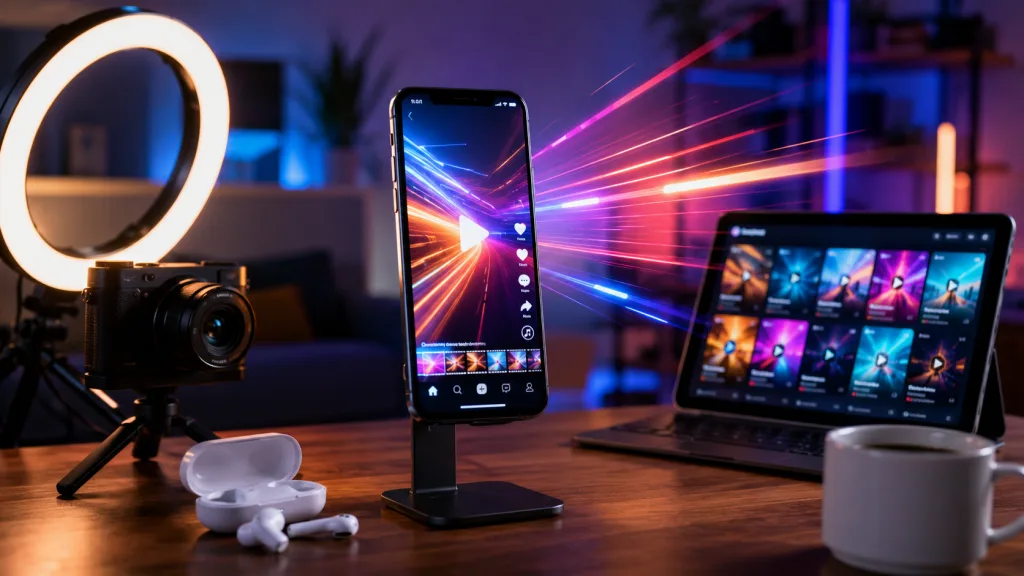
Short videos have profoundly transformed the way people consume entertainment online. In just a few years, formats like TikTok, Instagram Reels, YouTube Shorts, and short videos on other networks have gone from being mere fleeting distractions to becoming one of the main forms of digital consumption.
Previously, online entertainment was dominated by long videos, blogs, forums, series, movies, and full broadcasts. Today, a large portion of the audience spends minutes or hours watching content lasting only a few seconds. Humor, information, fashion, recipes, news, sports, tips, music, behind-the-scenes glimpses, trivia, and opinions all fit into short videos that can be consumed at any time of day.
This growth has changed not only audience behavior, but also the way creators, brands, artists, and platforms produce content.
The success of immediate attention
One of the reasons for the success of short videos is their speed. In just a few seconds, the content needs to grab attention, convey an idea, and generate some kind of reaction. This could be laughter, surprise, identification, curiosity, or emotion.
This format fits perfectly into today's routine. Many people watch short videos while waiting in line, taking a break at work, commuting, or relaxing on the couch. No long commitment is needed. Just open the app and start watching.
Deloitte pointed out in its 2025 digital media trends report that social platforms, creators, user-generated content, and advanced recommendations are shifting the center of gravity of entertainment, competing for people's time and brand investment.
The algorithm changed the way content is discovered.
In short videos, the audience doesn't always choose what they're going to watch. Often, the algorithm decides. The person opens the app and receives a personalized sequence of videos based on likes, viewing time, comments, shares, and previous interactions.
This has changed how content is discovered. Before, users needed to follow channels, search for topics, or access specific websites. Now, content arrives automatically, in a continuous stream.
This logic makes the experience engaging, but it can also be addictive. Since there's always a next video, it's easy to lose track of time. The constant feeling of novelty keeps the audience scrolling for longer than they planned.
Independent creators have gained ground.
Short videos have democratized content creation. A person with a cell phone, a good idea, and consistency can reach millions of views without relying on television, large production companies, or expensive equipment.
This opened up opportunities for new comedians, educators, commentators, cooks, musicians, experts, and influencers. Many creators started with simple videos and built careers, communities, and businesses from this format.
The logic of fame has also changed. Today, a person can become known through a viral video lasting only a few seconds. This rapid reach can open up opportunities, but it also demands consistency, creativity, and adaptation to changing platforms.
Entertainment has become more fragmented.
Short videos have made entertainment consumption more fragmented. Instead of watching an entire program, many people consume snippets, cuts, and isolated moments. A long interview becomes several clips. A podcast becomes cuts. A game becomes highlights. A series becomes commented scenes.
This allows audiences to discover content quickly, but it also changes their relationship with longer narratives. Some people spend more time watching clips of a film or program than watching the entire work.
Deloitte also observed in 2026 that media companies seek to keep fans engaged throughout the year with social content, exclusive experiences, and continuous interaction, a sign that entertainment no longer depends solely on the main release.
Brands have started producing as creators.
The rise of short videos has also changed advertising. Traditional, highly polished, and lengthy ads don't always work well in this environment. Audiences prefer content that is quicker, more direct, authentic, and similar to what they already consume in their feed.
Therefore, many brands have started adopting creator language: videos with behind-the-scenes footage, trends, responses to comments, quick demonstrations, humor, and educational content.
The shift is so significant that social media creators are gaining increasing market share in the advertising industry. A 2025 analysis cited by The Guardian indicated that content from creators on social media was on track to surpass traditional media in advertising revenue, driven by platforms like YouTube, TikTok, and Instagram.
The format influences music, fashion, and culture.
Short videos have also become drivers of cultural trends. A song can go viral because of a dance. Clothing can sell more after appearing in several videos. An expression, joke, or challenge can spread rapidly between different countries.
This has made entertainment more participatory. The audience not only watches; they also reproduce, comment, remix, adapt, and share. A trend can originate from a small creator and be replicated by thousands of people.
This speed has changed the music industry, fashion, marketing, and even the way news and debates circulate. What goes viral in short videos can influence conversations outside the internet.
Short content doesn't mean simple content.
While many short videos are lighthearted and entertaining, the format can also convey useful information. There are short videos about science, history, finance, health, cooking, languages, technology, and careers.
The challenge is to condense the message effectively. A good short video needs to be clear, objective, and interesting from the very first seconds. This requires skill in scriptwriting, editing, and communication.
However, there is a limitation: complex topics can be oversimplified. Therefore, short videos work very well as an entry point, but they don't always replace longer content, lectures, reports, or in-depth analyses.
The competition for attention has intensified.
With so many videos available, the competition for attention has become enormous. Creators need to grab audiences quickly. Platforms need to deliver increasingly personalized content. Brands need to appear relevant in just a few seconds.
This competition can generate creativity, but it also pushes for excess. Catchy titles, fast cuts, controversies, and constant stimulation are used to prevent the viewer from skipping to the next video.
For the audience, the challenge is to consume consciously. Short videos can entertain, teach, and inspire, but they can also steal time without the person realizing it.
Conclusion
The growth of short-form content has changed online entertainment because it has made consumption faster, more personalized, participatory, and accessible. Videos lasting only a few seconds have begun to launch trends, reveal creators, drive brand engagement, and compete with films, series, podcasts, and traditional programs.
This format fits the modern routine because it offers immediate and easy-to-consume entertainment. At the same time, it brings new challenges, such as excessive stimuli, fragmented attention, and superficiality in some topics.
Short videos don't completely replace long-form content, but they have transformed how we discover, discuss, and share entertainment. In today's digital environment, the first contact with a song, series, news story, or creator often begins with a short video. And this has forever changed the logic of online entertainment.
O SilvaDaily não é afiliado, patrocinado ou endossado por Instagram, TikTok e YouTube. Instagram, TikTok e YouTube são marcas de seus respectivos proprietários. Promoções e condições devem ser confirmadas nos canais oficiais.