Video podcasts: how this format is changing online entertainment.
Video podcasts have ceased to be merely a filmed version of audio programs. Today, they have become their own format of online entertainment, blending conversation, behind-the-scenes footage, viral clips, audience interaction, and a strong presence on digital platforms. What was once consumed primarily with headphones is now also watched on television, mobile phones, computers, and in short videos on social media.
This growth didn't happen by chance. Audiences have come to value more spontaneous, longer, and conversational content, but they also want quick, easy-to-share clips. Video podcasts can cater to both behaviors: they offer full episodes for those who want depth and short clips for those who prefer to consume content in just a few minutes.
By 2026, this format will already influence how creators, brands, artists, and platforms compete for people's attention.
What are video podcasts?
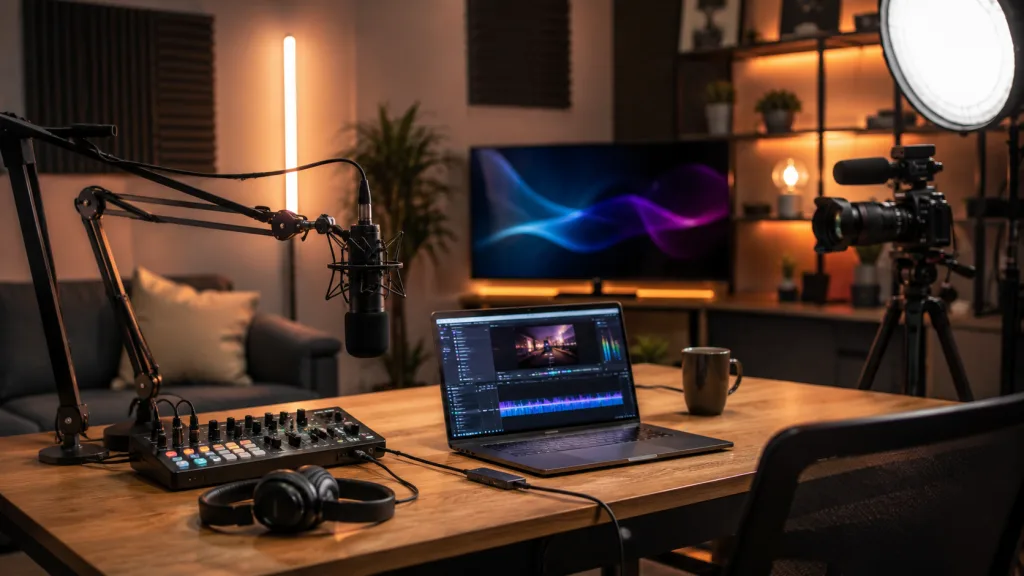
Video podcasts are programs recorded in audiovisual format, usually with presenters, guests, visible microphones, cameras, and a prepared set. They can be interviews, debates, comedy shows, analyses, conversations about culture, business, sports, technology, behavior, or entertainment.
The difference compared to a regular video lies in the style. Video podcasts tend to maintain a longer conversational structure, with a less rigid pace and a greater sense of intimacy. The audience not only watches the content, but also the expressions, reactions, pauses, laughter, and atmosphere between the participants.
This detail significantly changes the experience. Seeing the speaker's face creates a stronger connection and helps to hold attention, especially in conversations with familiar guests or on emotional topics.
YouTube has become one of the main homes for podcasts.
The growth of video podcasts is directly linked to YouTube. The platform was already strong in long-form videos, recommendations, search, and monetization, which favored the migration of many programs to the audiovisual format.
Data from Edison Research showed that, among weekly podcast consumers in the United States aged 13 and older, YouTube led as the most used service in the first quarter of 2025, ahead of Spotify and Apple Podcasts.
This shows an important shift: for many people, podcasts are no longer just something they "listen to." They are also something they watch. This transformation brings podcasts closer to the world of TV, talk shows, and digital entertainment channels.
The format favors viral cuts.
One of the great strengths of video podcasts lies in their editing capabilities. A full episode might be an hour or two long, but short clips of just a few seconds or minutes circulate on platforms like TikTok, Instagram Reels, and YouTube Shorts.
These clips act as gateways. Many people discover a podcast through a striking quote, a controversial opinion, a funny story, or a spontaneous reaction. Then, some of the audience looks for the full episode.
The growth of music video culture is so strong that it already influences how programs are produced. Many creators think about moments with viral potential even during recording. Recent reports indicate that the economy of cuts has become a central strategy for content distribution on social media.
This changes online entertainment because long-form content is now fed by short-form content, and vice versa.
Closer ties between audience and creators.
Video podcasts create a sense of intimacy that's difficult to achieve in highly produced formats. The setting, the long conversations, the natural mistakes, and the participants' reactions make the audience feel like they're listening to a real conversation.
This close relationship strengthens communities. Viewers comment, suggest guests, share clips, and follow behind-the-scenes content. In many cases, the podcast ceases to be just a program and becomes a brand with a loyal audience.
For independent creators, this is a great opportunity. With a good idea, consistency, and a presence on digital platforms, it's possible to build an audience without depending on major broadcasters.
Celebrities and media personalities have migrated to this format.
Another sign of the strength of video podcasts is the growing presence of artists, comedians, journalists, athletes, and presenters in this market. Many professionals who previously depended on television now find more creative freedom in podcasts.
Reuters highlighted in 2026 that, while traditional TV formats are losing ground, video podcasts on YouTube have become important spaces for comedy, interviews, and commentary, offering more autonomy and a direct connection with the audience.
This shift shows that online entertainment is no longer a minor alternative. For many creators, it has become the primary stage.
Brands are also interested.
Video podcasts also attract advertisers. This is because audiences tend to spend more time with the content and build trust in the hosts. When an ad appears within a conversation or is presented by the host themselves, it can seem more natural than a traditional advertisement.
Furthermore, video expands commercial possibilities. A brand can appear in the scene, sponsor a segment, send products, generate sponsored clips, or create integrated campaigns with social media.
For businesses, this format offers something valuable: qualified attention. Those who listen to a long podcast tend to be more engaged than those who just quickly scroll through their feed.
Consumption has become more flexible.
One of the reasons for the success of video podcasts is their flexibility. The same content can be consumed in various ways. A person can watch the entire episode on TV, listen to just the audio while driving, watch clips on their phone, or follow excerpts on social media.
This broadens the program's reach. Different audiences consume the same material at different times of the day.
Deloitte pointed out that, by 2025, 27% of consumers in the United States would be listening to vodcasts weekly, with the strongest presence among Generation Z and millennials. This preference among younger audiences helps explain why the format has become strategic for platforms and creators.
Simpler production, but with a professional look.
Another important factor is that producing a video podcast has become more accessible. Better cameras, cheaper microphones, simple editing software, and free distribution platforms have lowered the barrier to entry.
At the same time, competition has increased. Today, it's not enough to turn on a camera and talk. The public values good audio, pleasing images, organized sets, well-done editing, and interesting topics.
This created a new standard: simple yet carefully crafted productions. The format maintains spontaneity, but requires planning to stand out.
The impact on online entertainment
Video podcasts are changing entertainment because they blend characteristics of various formats. They have the depth of long interviews, the informality of conversations between friends, the visual power of video, the viral appeal of edits, and the direct connection of social media.
They also compete with television, radio, streaming services, YouTube channels, and social media. A person who previously watched a talk show on TV can now follow a podcast with more flexibility in terms of scheduling and more specific topics.
This segmentation is one of the format's greatest strengths. There are podcasts for practically every interest: politics, film, music, entrepreneurship, humor, science, games, sports, pop culture, motherhood, finance, and behavior.
The challenges of the format
Despite their growth, video podcasts also face challenges. The sheer number of programs makes it difficult to discover new talent. The pursuit of viral clips can encourage controversial or superficial content. Furthermore, producing video requires more infrastructure than simply recording audio.
Another point is platform dependency. Changes in algorithms, monetization, or distribution rules can directly affect creators' reach.
Therefore, the strongest projects tend to be those that build community, identity, and consistent quality, rather than relying solely on virality.
Conclusion
Video podcasts are transforming online entertainment because they combine depth, visuals, spontaneity, and distribution across multiple platforms. They allow for longer conversations, generate viral clips, bring creators closer to their audience, and offer new opportunities for brands and communication professionals.
In a digital environment marked by content overload, this format stands out for creating connection. The audience doesn't just want quick information; they also seek authentic conversations, familiar faces, and a sense of closeness.
Everything indicates that video podcasts will continue to grow, not as replacements for traditional audio, but as a complementary evolution. They show that the future of online entertainment will be increasingly hybrid: for listening, watching, sharing, and participating.
O SilvaDaily não é afiliado, patrocinado ou endossado por Instagram, TikTok, YouTube, Spotify e Apple. Instagram, TikTok, YouTube, Spotify e Apple são marcas de seus respectivos proprietários. Promoções e condições devem ser confirmadas nos canais oficiais.